


Hard Water and Limescale: Getting a Wandsworth Flat Ready for Check-Out
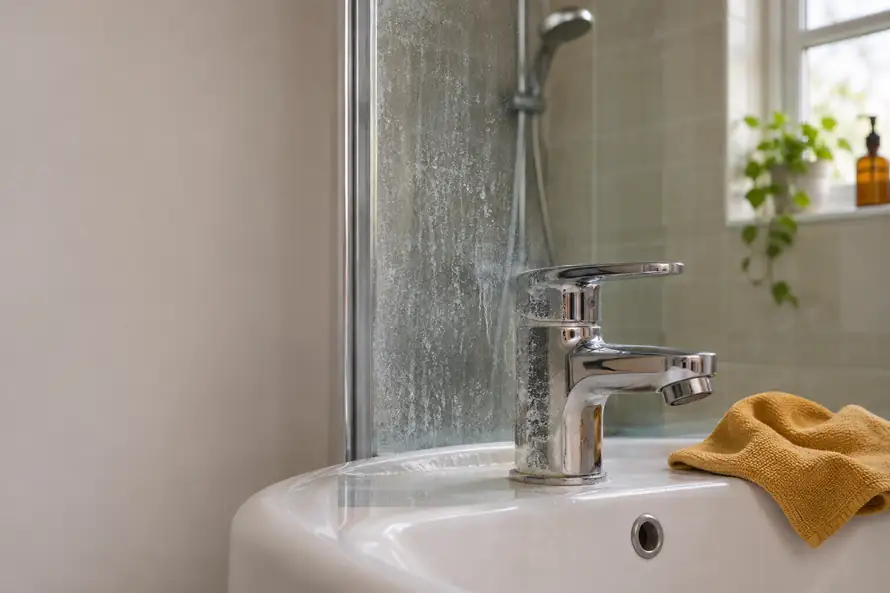
Ask anyone who was a tenant in Wandsworth for a few years what the most challenging part of moving out was, and limescale will be a frequent answer. It’s the white crust around the tap. It’s what makes a shower screen cloudy. Inside the toilet bowl, it’s the ring.
No, it’s not because you don’t clean enough. It’s because of the water. Since limescale is one of the first things inspections spot, tackling it before you move out is a wise call. Find out why it builds up so quickly, where it forms, what you can do about it, and how a professional clean handles it. Keep reading.
Wandsworth flats scale up fast. But why?
Thames Water says all the water in its region is hard. By its own scale, “hard” means 200 to 300 milligrams of calcium carbonate per litre. The thin layer of that mineral will show every time after the water dries. And limescale will appear for sure when you do it twice a day, every day, for a year.
Some homes have it worse than others. Half of the cleaning requests we get from Wandsworth are for homes with two or more bathrooms. Across the rest of London, it’s only around a third. So when it’s two bathrooms, two showers, two sets of taps, and two toilets, everything scales up at once.
Surprisingly, almost nobody notes limescale when booking. Only about one in twenty-five people across London mention limescale. More often than not, it shows up at the inspection, when it’s already too late to handle it.
Why it matters at check-out
Cleaning is the top reason landlords deduct from the deposit. Back in 2025, cleaning made up nearly three in ten deposit claims handled by the Deposit Protection Service. It has topped the list for the last five years and trumps damage and rent arrears.
Limescale is definitely in that category. Faded paint or a worn carpet are signs of a property's slow ageing and fall under fair wear and tear. Because it can be removed, scale crust on a tap is a cleaning issue. Want details about this distinction? Check out our fair wear and tear versus cleaning topic.
Inventory clerks start by checking the places where scale builds up most: taps, shower screens, tiles, and the toilet bowl. At check-in, photos clearly show these spots. So, if there are differences, it's easy to spot them.
Limescale’s hiding spots
Nothing tricky about the obvious spots. The ones people skip would be:
- The base of the taps, where the tap meets the basin or the worktop, and the aerator at the spout.
- Shower heads, especially the small holes; they can make the spray uneven.
- Glass shower screens, where, instead of white marks, scale looks like a cloudy film.
- Tile grout and the edges of the bath, where water stands after every shower.
- The waterline inside the toilet bowl, which becomes brown or grey as scale collects dirt.
- The kitchen sink and drainer, especially around the plughole.
- The washing machine drawer and seal, where scale and old detergent build up together.
Some people know it as “salt deposits”. It's the same thing.
What you can do in the last few weeks
If your move-out date is a few weeks away, a little effort now can save you elbow grease later.
Stop it building up. After you use the shower screen and taps, wipe or squeegee them. You only need 30 seconds to do it and prevent scale from building up.
Soak what you can take off. Typically, you can unscrew the shower heads and tap aerators. Let them soak in a descaler or a solution of citric acid or white vinegar, then rinse.
Be careful with stone. Natural stone such as marble or limestone doesn’t take acid descaler, as it can dull the finish. Before you use anything acidic, check the surface material. Rinse thoroughly afterwards.
Skip the scourer. Don’t use abrasive pads and powders, as you will scratch chrome and glass. A scratched surface will scale even more quickly.
If you’ve had scale throughout the entire tenancy, home remedies won’t be enough. That’s where professional cleaning pays off.
What our move-out clean covers
Descaling isn't an add-on. Every move-out clean includes it, in every bathroom and in the kitchen:
- Removing limescale from taps, shower fittings and glass screens;
- Clearing soap scum and limescale from tiles and splashbacks;
- Wiping off waterlines from around basins and toilets;
- Scrubbing and disinfecting baths, basins, toilets and shower trays;
- Descaling and polishing the kitchen sink and taps;
- Cleaning the washing machine drawer, seal and rim.
If a home has two bathrooms, we don’t use another price list; we just need more time to descale. Our prices include all products and equipment. We can clean while you’re away.
The job concludes with a signed cleaning checklist, an invoice and before-and-after photos. If any issues arise, contact us with photos within 7 days. We’ll come back and re-clean for free. The guarantee refers to the quality of the clean; getting your deposit back in full depends on many factors that we don’t control.
When it doesn’t come off
If left untreated for years, limescale doesn’t just sit on the surface; it etches glass and pits chrome. And no matter how thorough the cleaning is, it won’t remove limescale from an etched surface.
Is this familiar to you? Take a look at the check-in inventory and photos. It’s not your duty to fix damage that was present when you moved in. If there’s damage from years of scale, inform your landlord or agent early. Don’t leave it as a surprise at the move-out inspection.
Don’t return the keys just yet
Once the cleaning is complete, check every tap, screen, and toilet. Take photos of them in good light. If you end up in a cleaning-related dispute, those photos and the cleaning checklist serve as proof.
Everything you need to learn about moving out of the borough, from parking a removal van to disposing of furniture, is in our guide to moving out in Wandsworth. To see what your neighbours book, read what Wandsworth renters ask us for. Want to let us handle the scale? Here’s what our move-out clean in Wandsworth includes.