


London's Moving Season: Why Summer Move-Outs Need Booking Early
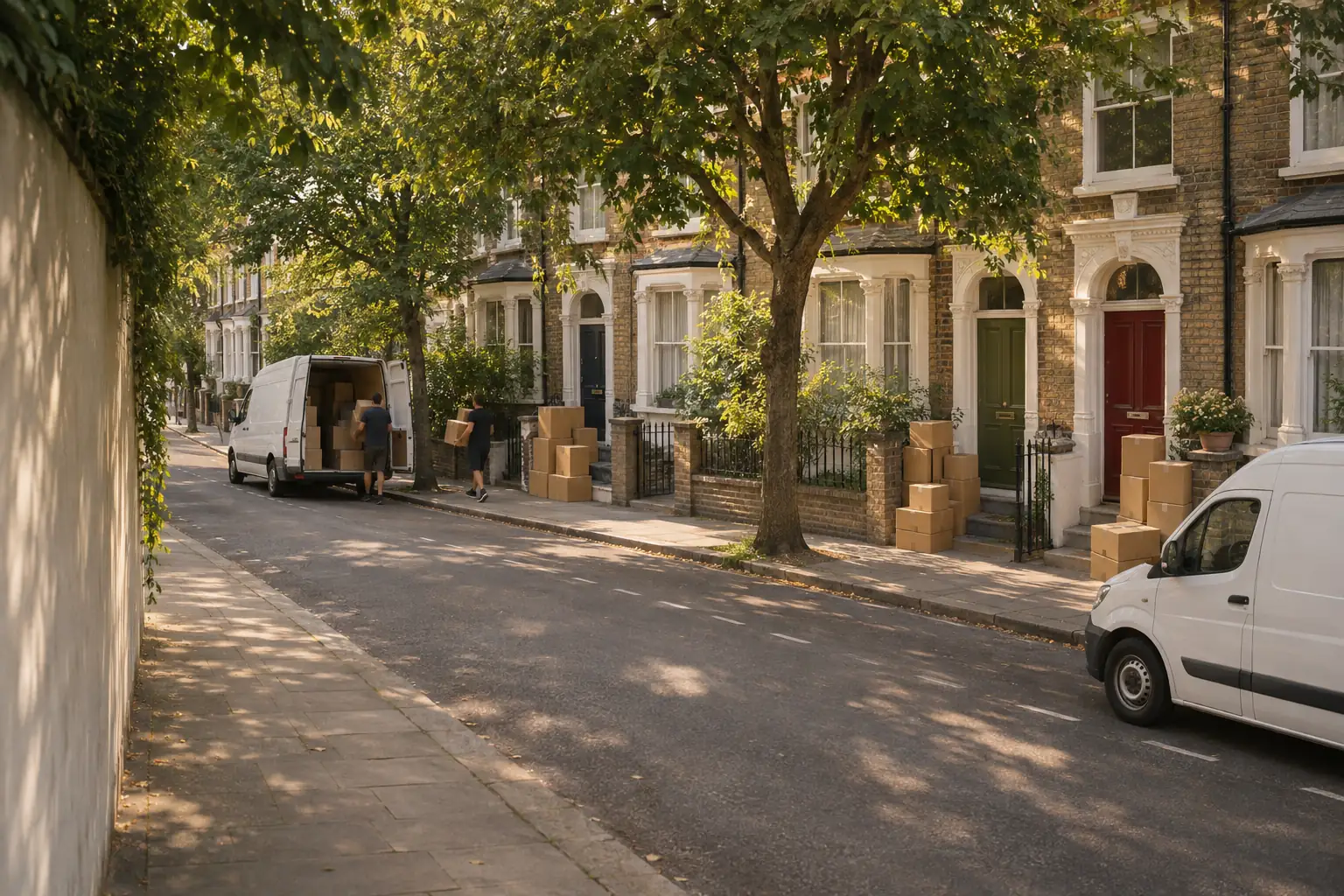
If you're planning to move out of a London rental between June and September, remember you’re one of the many. This year, nearly nine in ten of the London move-out cleaning requests were for a date in that period. By comparison, the rest of the year isn't much quieter.
A move-out isn’t a single booking, so that matters. Removal firm, parking space for the van, council collection for the furniture you leave behind, a clean before the check-out inspection: move-outs include all of that. In summer, thousands of other people book these services at the same time. Anything requiring notice periods fills up quickly. This guide breaks down why London sees so many move-outs in summer, what changed this year, and how to avoid a last-week rush when planning a summer move-out. Already have a date? Book the clean first and plan everything else around it.
Why so many London moves happen in the same few months
London's renters move more often than renters in the rest of England. According to the Greater London Authority's Housing in London report, private renters here move out more frequently than those in the rest of the country. London has more private renters, and rents are more than 60% higher than the England average.
People move out for various reasons throughout the year, so the moves don’t spread evenly either. As the academic year ends in June and starts again in September, students vacate one rental and move into another. In September, new graduates start jobs, so through the summer, they look for their first flat. Families move in July and August, as they want to make a home before the school year begins. For years, most leases were 12 months. The cycle kept going, as a flat rented in summer would be vacated the next summer.
Looking at our own figures, we notice how high the peak rises. Between May and October 2026, here’s what our London requests looked like:
- almost nine in ten were for a date between June and September;
- three in five were for flats or studios; one-bedroom home was the most frequent size;
- typically, clients asked for a quote eight days before the date of the clean;
- one in five asked for a date less than two days away.
That last surely calls for extra attention. Asking for a clean for the day after tomorrow, in the middle of August, is the most challenging to fit in, not only for us, but also for everyone else involved in a move.
Things changed in 2026
From 1 May 2026, the Renters' Rights Act changed the rules for private renting in England. When and how you vacate depend on two major changes:
- Fixed end dates have gone. Tenancy agreements no longer have an end date. As a result, most existing shorthold tenancies became rolling periodic tenancies on 1 May 2026. Your tenancy ends when you give notice; it no longer ends on a fixed date.
- Tenants give two months' notice. Give your landlord two months' written notice to end a periodic tenancy; you pay rent until the end. As long as the agreement is in writing, you and your landlord can set it for a shorter period.
In practical terms, you can now choose and plan when you leave; it’s no longer something written into a contract like it was a year ago. However, you have to start planning earlier. Want to vacate before the end of August? Give your landlord notice around the end of June. Go over the GOV.UK guide to understand how the notice period syncs with your rent day.
Will the Act make London’s moves spread more evenly throughout the year? It’s too early to tell. The academic year, the school year and graduate start dates stayed the same. For now, it’s safe to say summer will remain busy.
What books up first in summer
Not everything in a move fills up quickly. Things that fill up first are those requiring the most notice. In London, councils run many of them with fixed rules.
Parking for the van. Each London borough has its own notice period for suspending a parking bay. It ranges from around seven working days to 17 days; booking late can bring a short-notice fee or mean you don't get a suspension at all. Is your street a red route? Transport for London requires at least six working days. Our guide to bay suspensions for removal vans lists what ten boroughs charge and how much notice each needs.
Council bulky waste collections. Every borough operates its own collection for furniture and large items. Slots are limited each week. In summer, as people clear out at the same time, the nearest dates fill up quickly.
Removal firms. Most people move out on weekends, as they can take the day off. So, Summer weekends fill up first.
The clean. Move-out cleans have to be done after the furniture is removed and before the check-out inspection. Typically, it’s a 1- to 2-day window. It’s the end of July; thousands of people need the same window. Want to get the preferred date and time? Book as early as possible.
A summer move-out, week by week
Work backwards from the day you return the keys to avoid a last-week rush. Moving out at the end of August? Here’s a timeline to fit your own date.
| When | What to do | Why then |
|---|---|---|
| End of June | Give your landlord notice in writing | Two months' notice under the Renters' Rights Act |
| Early July | Book the removal firm and the check-out appointment with your agent | Summer weekends go first |
| Early August | Find out who runs your street and apply for a parking suspension | Some boroughs need 14 to 17 days |
| Early to mid August | Book the council's bulky waste collection for anything you're not taking | Summer slots fill fastest |
| Two weeks before | Book the move-out clean, with carpets if they need it | Our London customers typically book about eight days ahead; booking earlier gives you a choice of dates |
| The last week | Take meter readings, tell the council and your energy supplier your leaving date, and set up post redirection | So the bills stop on the right day |
| Moving day, or the day after | Furniture out, then the clean, then the check-out | An empty flat cleans properly and inspects fairly |
Book the clean for an empty flat
Booking the clean for after the furniture is removed is the single most helpful thing you can do. For a London flat, the removal team has to drag boxes through the kitchen and hallways. Wardrobes and beds have stayed in one place for years, leaving dust and marks. If you clean first and move second, the flat will no longer look spotless at the key handover.
Two options work in practice. You can book the removal van for the morning and do the clean in the afternoon the same day. Is the move long, or does the removal team finish late? As long as you still have the keys, you can have the clean the day after. No matter when it’s done, cleaning requires running electricity and hot water. Ask the supplier to cut them after the cleaning team has finished.
We follow a fixed checklist with each clean. We degrease kitchen appliances, cupboards, and drawers (inside and out), remove limescale from taps and shower screens, and wipe skirting boards, doors and switches, and floors. Carpet cleaning shows up in around a third of our London requests. When booked with the clean, it’s 40% of its standard price. We give you a signed checklist, an invoice and before-and-after photos. Send them to your agent. If we’ve missed something, tell us with photos within 7 days. We’ll return to re-clean for free.
Moving within London in summer
Typically, people vacating a London rental in summer move into another one. Many do it the same day or within a few days. So, pressure comes from two fronts.
Money is the first. The new landlord will ask for the new deposit before you get the previous one back. As rents keep on rising, the new deposit will probably be bigger. In most boroughs a five-week deposit runs well into four figures. The sooner you get the old deposit back, the less time you will pay for both. Most deposit disputes track back to cleaning.
Time is the second. Moving out and in on the same day? You don’t have another day to clean the old flat after the van leaves. So, maybe you can ask your landlord to keep the keys for one more day. Another option is to book the clean for the afternoon of moving day. In the meantime, we can unpack at the new place. We can clean while you’re not in, and pick up/return the keys with the agent or the building after we finish.
Are you a student or a landlord?
The summer peak affects students more than anyone else. As the academic year ends, many London student tenancies all end in the same few weeks. From shared deposits to vacating during exams, many things are different for students; see our guide on moving out of a London student let to learn more.
The easiest time for landlords to re-rent is summer. However, a week or two between tenancies is also the priciest in summer. Every empty week between tenancies costs a landlord a week's rent, so the changeover is worth planning as carefully as the move itself.
Planning a summer move-out?
The earlier you plan, the more control you can have over your move. Our London guide covers what changes from one borough to the next. Once you know your move-out date, see what a move-out clean with us includes.