


Property Licensing in Tooting, Balham and Putney: What It Means When a Tenancy Ends
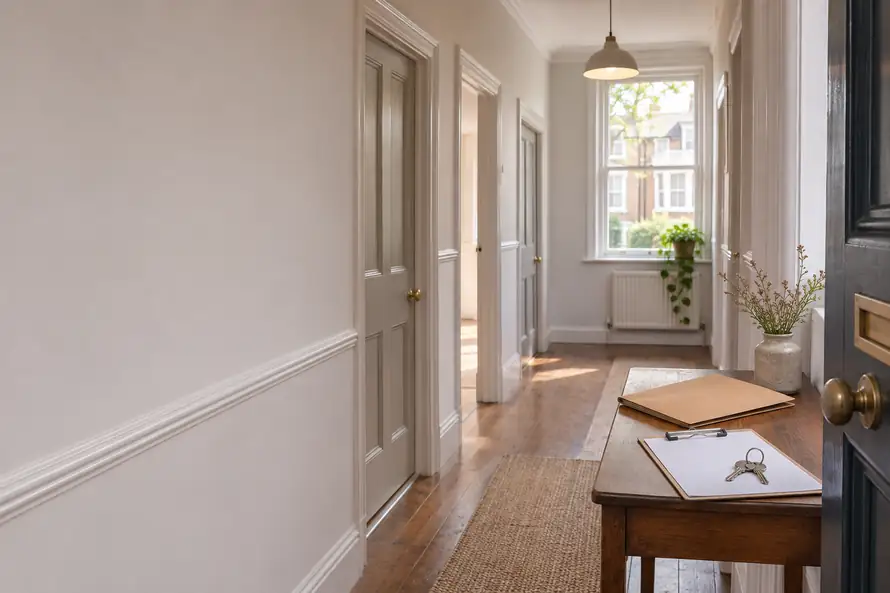
Beginning in 2025, far more rented homes in Wandsworth need a council licence. Currently, almost every private rental in Tooting, Furzedown and South Balham needs one. Since April 2026, the same applies to rentals in East Putney, West Putney and Northcote. Across the borough, more shared houses and flats need licensing than before.
So far, most of the information has been addressed to landlords. The following guide covers what licensing means at tenancy ends: what tenants can check, what landlords need to handle between tenancies, and what stays the same. Across the borough, we clean homes when tenancies end, so we focus on what can be done. Note that this isn’t legal advice; it’s general information.
Which homes need a licence
Alongside the national rules for shared houses, Wandsworth operates two types of schemes.
Selective licensing covers almost all privately rented homes in specific wards:
- Furzedown, Tooting Bec, Tooting Broadway and South Balham, since 1 July 2025;
- East Putney, West Putney and Northcote, since April 2026.
Additional licensing applies to smaller shared homes across the entire borough. This has been the case since 1 July 2025. It applies to homes rented to four people max from more than one household with a shared bathroom or kitchen, and to shared flats in purpose-built blocks of three or more flats.
Typically, a licence is valid for five years. Exceptions apply to homes like those run by housing associations. To make sure a specific address is covered, use the council's interactive map and postcode checker.
How much is it? Who pays?
The landlord, or whoever applies, pays the licence fee. Payment is made in two parts: when applying and when the licence is issued.
| Licence | Total fee per property |
|---|---|
| Selective licence | £885 |
| Additional (shared home) licence | £1,507 |
Discounts are available, including when applying early in the newer Putney and Northcote area, for landlords who meet the council's “Gold Standard”. Homes with a good energy rating also get discounts. For the current amounts, see the council's fees page.
For tenants, it’s clear and simple: the landlord pays the licence fee.
What a property needs to get a licence
Conditions have to be met for a licence. According to the council, these are:
- an annual gas safety certificate;
- appliances supplied by the landlord, such as fridges and kettles, must be kept safe and in working order;
- a smoke alarm on every storey used as living space;
- a written statement of the tenancy terms; if the council asks for it, it has to be provided within seven days.
- a home that is “reasonably suitable for occupation”. This covers bathrooms, toilets, washbasins, showers, cooking facilities and fire precautions, as well as minimum room sizes.
The conditions don’t say how clean a place must be when the tenant moves out. Same as before, the tenancy agreement and the check-in inventory still decide that.
What changes for tenants when they move out
Check whether the home was licensed. On its Regulatory Services Hub, the council has a public register of licensed properties. To see it, you must register first.
Know what happens if it wasn't. Apply to the tribunal if your home isn’t licensed, even though it should have been. You may claim back up to 12 months of rent paid during the unlicensed period. If you think that's your case, don’t return the keys until you get advice on this.
Your deposit rules stay the same. You still need to protect your deposit in an approved scheme. Since the Renters' Rights Act came in on 1 May 2026, tenancies continue without a fixed end date. If the landlord didn’t protect the deposit, they cannot get a possession order until they fix the issue on most grounds.
Cleaning is still checked against the inventory. Licensing doesn’t raise or lower the expected cleaning standard at the check-out. The property is still compared to your check-in report and photos.
What changes for landlords at the move-out
Between tenancies, landlords can handle anything related to the licence conditions. If you’re a landlord, check whether the gas certificate is valid, whether the smoke alarm works on every storey, and whether the appliances you supply run correctly.
While a professional cleaning supports a rental’s condition, it’s not a safety check. As standard, we clean ovens, hobs, fridges, freezers and the washing machine drawer. Should our team discover anything broken, they will inform you. However, only a qualified engineer can confirm an appliance is safe.
Shared homes are where licensing and moving out most often meet. Under the borough-wide additional scheme, a house shared by up to four people from different households may need a licence. When one sharer leaves and the others stay, or everyone leaves at different times, it's easy to lose track of who is responsible for the kitchen, the bathroom and the hallway.
The tenancy agreement decides that, not the licence. If you're splitting the cost of a final clean between housemates, agree early which rooms are shared and which are private, and photograph the shared rooms when the clean is done. Our guide to splitting the move-out clean in a shared house goes through it step by step.
What’s our role?
Whether you're the tenant moving out or a landlord preparing for the next rental, cleaning when a tenancy ends is always a single job: bringing a place back to the inventory standard.
Our standard clean covers every room, all kitchen appliances, and descaling in the bathrooms and kitchen. In hard-water areas, this matters a lot. Our prices include all products and equipment. Tenants don’t need to stay in for the cleaning, and we end each job with a signed cleaning checklist, an invoice and before-and-after photos. Landlords use the photos as a dated record of the rental’s condition when the next tenant moves in.
Moving out of a licensed home?
Check the register, have the inventory and photos within reach, and give yourself time. Our guide covers the practical side of moving out in Wandsworth, from parking the removal van to disposing of furniture. If you're the landlord, see how to keep the empty weeks between tenants short. Once you’re ready to book, see what a move-out clean with us covers.